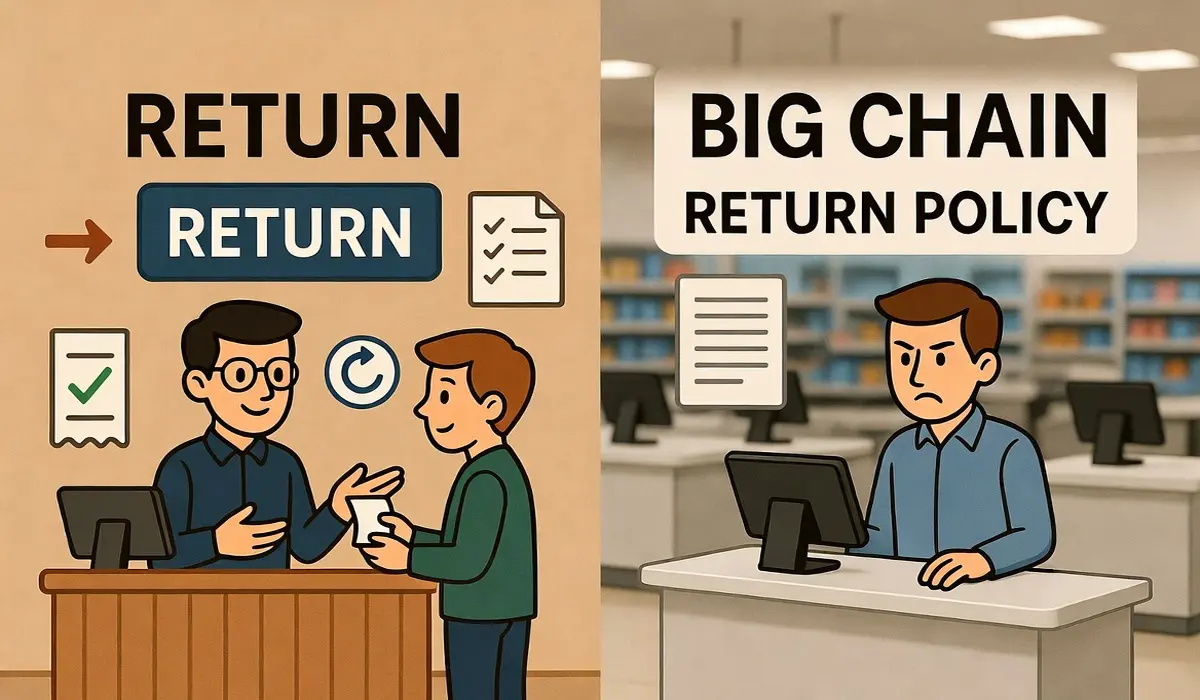
I love supporting small businesses. Unique products, personal customer service, and knowing my money goes to a real person instead of a corporate giant. But there's one area where small shops often fall short: return policies.
Last year, I bought a handmade leather wallet from an Etsy shop in Poland. It arrived with a loose stitch. I messaged the seller – she apologized but said returns to Poland would cost me $25 for shipping, and she'd only refund the product price (not shipping). I was stuck. Keep a flawed wallet or pay half its value to return it?
That's the reality of small business returns. Let me explain why they're different and how to protect yourself while still supporting the little guys.
🤔 Why Small Businesses Have Stricter Return Policies
It's not because they're greedy. It's because they can't afford not to be strict:
No economy of scale. Amazon can eat the cost of a million returns because they make profit on volume. A small shop selling 100 wallets a month loses a huge percentage of revenue if even 5 come back.
Return shipping is brutal. Small shops don't have negotiated shipping rates. A return label that costs Amazon $3 might cost a small business $15.
No warehouse to process returns. Many small business owners process returns in their living room. Every return costs them an hour of time – which they can't bill for.
Fraud protection is manual. Big chains have AI fraud detection (like we talked about in article‑11). Small shops have the owner's gut feeling – so they err on the side of "no returns" for anything that seems suspicious.
Once you understand this, their policies make more sense. But that doesn't mean you should accept unfair terms.
📜 What a Typical Small Business Return Policy Looks Like
Before you buy from a small online store (especially on Etsy, Shopify, or WooCommerce), expect to see some combination of these:
No returns for change of mind. Most small shops won't take back an item just because you don't like it. That's reserved for defects only.
Buyer pays return shipping. Very common. They may offer a return label but deduct the cost from your refund.
Store credit only, no refunds. Some will give you credit toward another purchase – which locks you into buying again from them.
Restocking fees. 10-20% is not unusual, especially for custom or made‑to‑order items.
Return window as short as 7 days. Big chains give 30-90 days. Small shops often require you to report defects within 48 hours and return within a week.
No returns on sale items. Very common – final sale for discounts.
These policies are legal in most places as long as they're clearly disclosed before you buy. The key word: clearly disclosed. If the policy is buried in fine print or only appears after checkout, you may have grounds to dispute.
🏬 Big Chains vs Small Shops – Side by Side
Factor
Big Chain (Amazon, Target)
Small Business (Etsy, Shopify)
Change of mind returns
Usually yes (30-90 days)
Rarely, or with restocking fee
Return shipping cost
Often free or subsidized
Buyer pays (can be $10-30+)
Refund method
Original payment
Often store credit or minus restock fee
Defective item policy
Free return, full refund
May still ask buyer to pay return shipping
Customer service speed
24/7 chat, but scripted
Personal but slower, may be unavailable weekends
🛡️ How to Shop Safely at Small Online Stores
I still buy from small shops all the time. You just need a few precautions:
Read the return policy before you add to cart. Don't assume it's like Amazon. Look for the link – usually at the bottom of the page or on a separate "Policies" tab. If you can't find it, email them first.
Pay with PayPal or a credit card, not debit. PayPal's dispute resolution is buyer‑friendly. Credit cards give you chargeback rights. Debit cards leave you with almost no protection.
Message the seller with specific questions. "If this doesn't fit, can I return it for a refund?" Get their answer in writing (Etsy messages, email). If they say yes and later refuse, you have evidence.
Check reviews for return mentions. Search the shop's reviews for "return", "refund", "customer service". See how other buyers fared.
For expensive items (>$100), ask if they offer return insurance. Some small shops partner with services like Route or Shipsurance that cover returns for a small fee (usually $1-3). Worth it.
📞 When You Need to Return – Steps for Small Businesses
If you receive a defective or wrong item from a small shop, here's how to handle it without burning bridges – and without losing money:
Contact the seller immediately (within 24‑48 hours). Don't wait a week. Small shops are more forgiving if you act fast.
Send clear photos and a video if possible. Show the defect, the packaging, the shipping label. This builds trust.
Be polite but firm. "I love your product, but unfortunately this stitching is loose. I'd like a replacement or refund. What's the best way to return this?"
Ask them to cover return shipping if it's defective. Many small shops will – but they might ask you to use the cheapest method (e.g., USPS ground instead of priority). Accept that.
If they refuse, escalate to the platform. Etsy, eBay, and Shopify all have buyer protection. Open a case. Include your photos and messages. Platforms almost always side with buyers for defective items.
One more thing: remember that small business owners are often overwhelmed. They might not reply on a Saturday night. Give them 48 hours before escalating. A little patience goes a long way.
Bottom Line: Small businesses deserve our support, but not at the cost of our consumer rights. Shop small – but shop smart. Read policies, use protected payment methods, and don't be afraid to ask questions before buying.
Yes, unless they explicitly stated a size chart and the item deviates from it. "Doesn't fit" is considered change of mind, and small shops are not required to accept those returns. Always ask for measurements before buying clothing or shoes from a small maker.
Etsy requires sellers to have a return policy. If you don't see one, message the seller and ask. If they don't respond or give a vague answer, skip that shop. A missing or unclear policy is a red flag. Use Etsy's buyer protection if something goes wrong – you have 100 days from delivery to open a case.
Written by Priya Kapoor
Priya has run her own small e‑commerce shop for five years and also shops on Etsy regularly. She understands both sides of small business returns.